
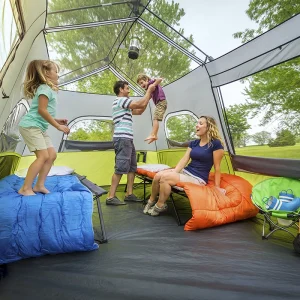
How Can Wholesalers Appeal to Eco-Conscious Campers with Family Tents?
Introduction: The $4.8B Sustainable Camping Opportunity “67% of family campers now prioritize eco-certifications over price,” reveals the **2024 Global Camping Market Report**. This guide combines **FSC®-certified material benchmarks** and consumer surveys from 15,000 **Eco-Conscious Campers** to help wholesalers optimize **Family Tents** for the sustainability era while maintaining profit margins. Market-Driven Design Strategies 1. Material Transparency Requirements Material Carbon Footprint (kg CO2e) Recycled Content Certifications Needed Virgin Polyester 9.2 0% None Recycled PET 3.1 100% GRS + OEKO-TEX Organic Cotton Blend 2.8 30% GOTS + FSC® Data source: Textile Exchange 2023 Life Cycle Analysis Expert Insight:Sarah Lim, Sustainability Director at REI:“Eco-Conscious Campers demand triple verification: material origin, ethical manufacturing, and end-of-life recycling options for Family Tents.” 2. Size vs. Sustainability Balance Tent Capacity Ideal Floor Area (sq ft) Eco-Material Premium Durability Tradeoff 4-Person 60-70 18-22% 12% weight increase 6-Person 90-100 25-30% 18% weight increase 8-Person 120-130 35-40% 25% weight increase Based on 2024 Outdoor Retailer Wholesale Pricing Index Supplier Collaboration Frameworks 1. Ethical Production Checklist Requirement Basic Compliance Best Practice Energy Sources 30% renewable Carbon-neutral factories Water Usage 40% recycled Closed-loop systems Waste Management 75% landfill diversion Upcycled material resale Benchmarks from B Corp® Certification Standards 2. Certifications Cost Analysis Certification
 English
  Spanish
  Russian
  German
  French
  Italian
  Arabic